


Why Country Clubs are Investing in Custom Embroidery Wood Sets for Member-Guest Tournaments
Why the Tournament Gift Decides Whether the Event Is Remembered
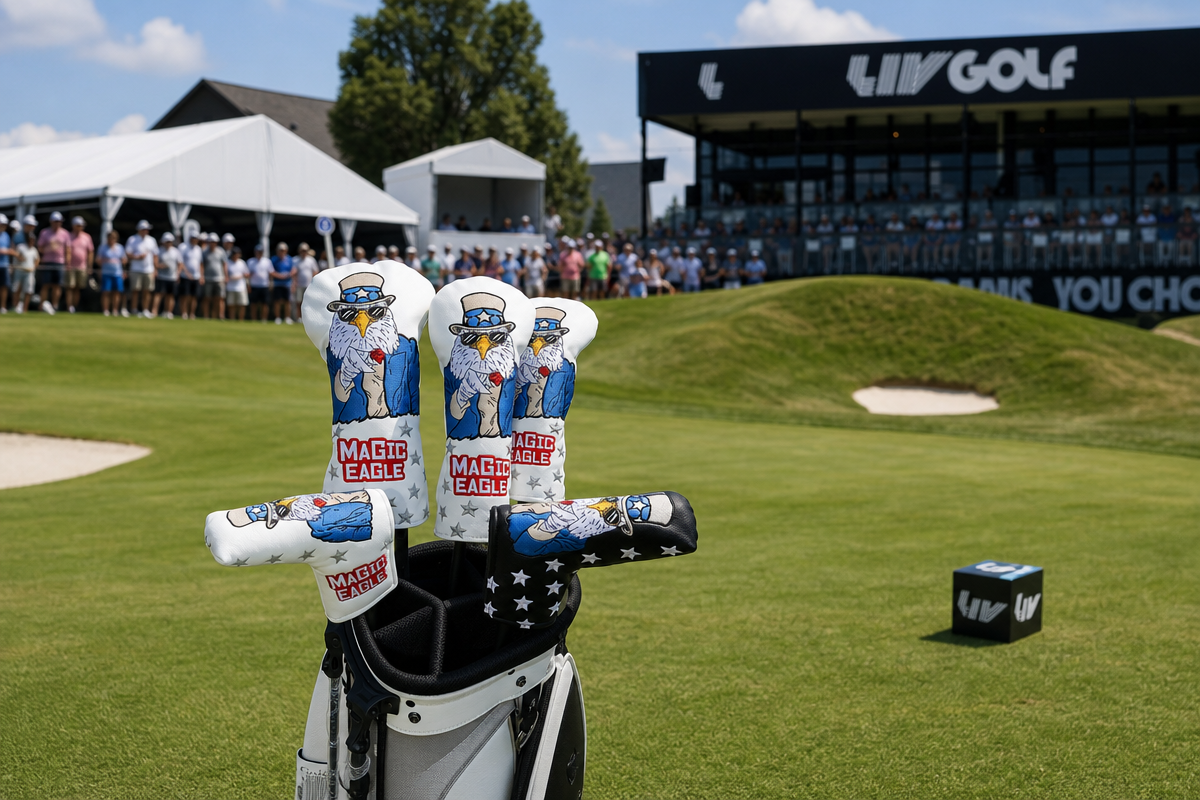
A member-guest tournament is judged by the guest, and the guest judges it largely by what they carry home. The entry fee, the course, and the dinner are all consumed on the day. The gift is the only part of the event that keeps working afterwards — it travels to other clubs in the guest's bag and is seen again on every round they play. That is the commercial case for moving gift budget out of disposable items and into a golf headcover set the guest keeps.
A logoed towel, a ball marker, or a sleeve of balls is used up, lost, or forgotten inside a month. An embroidered wood set stays in the bag for years, so the club crest is re-seen every time the bag is opened. For a club trying to convert a guest into a member, that is a far longer advertising tail than a place card at dinner.
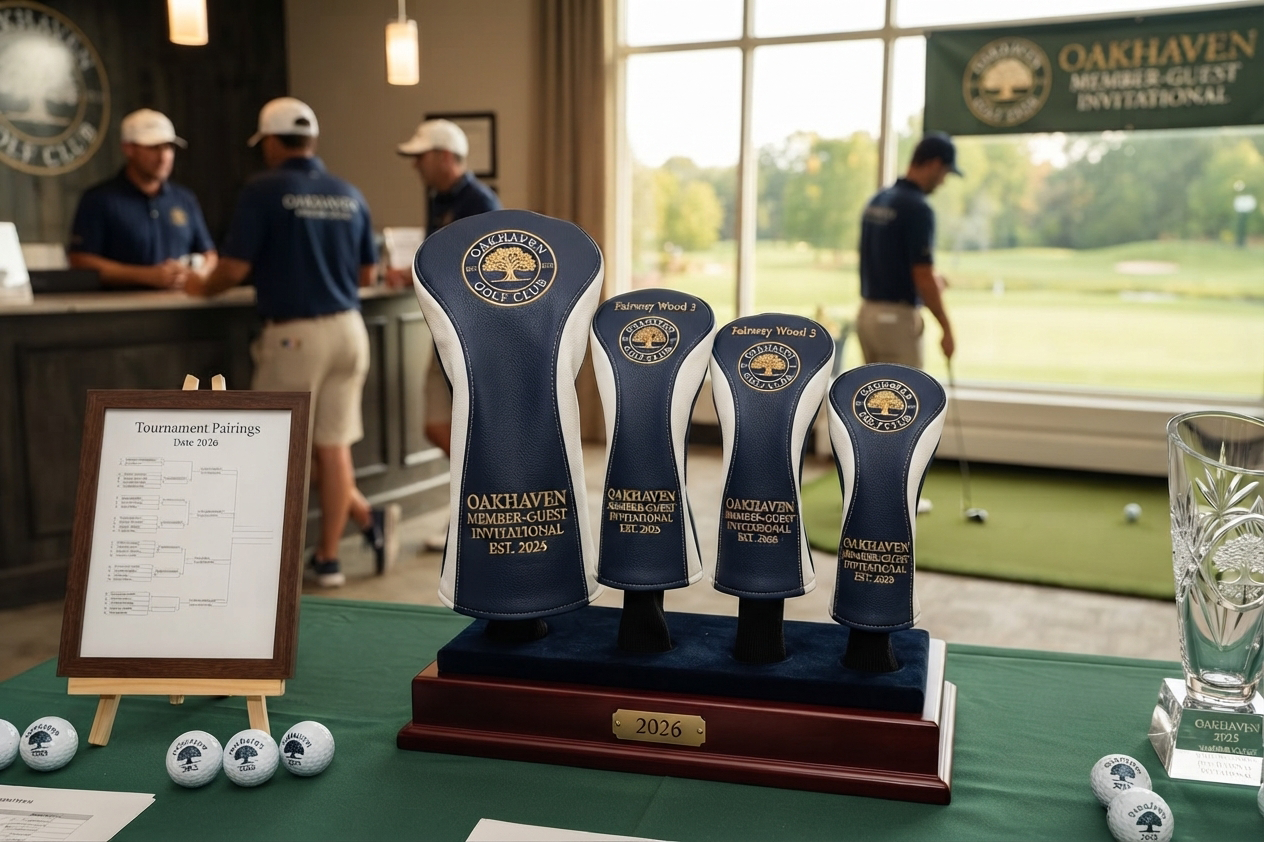
What an Embroidered Wood Club Cover Set Actually Contains
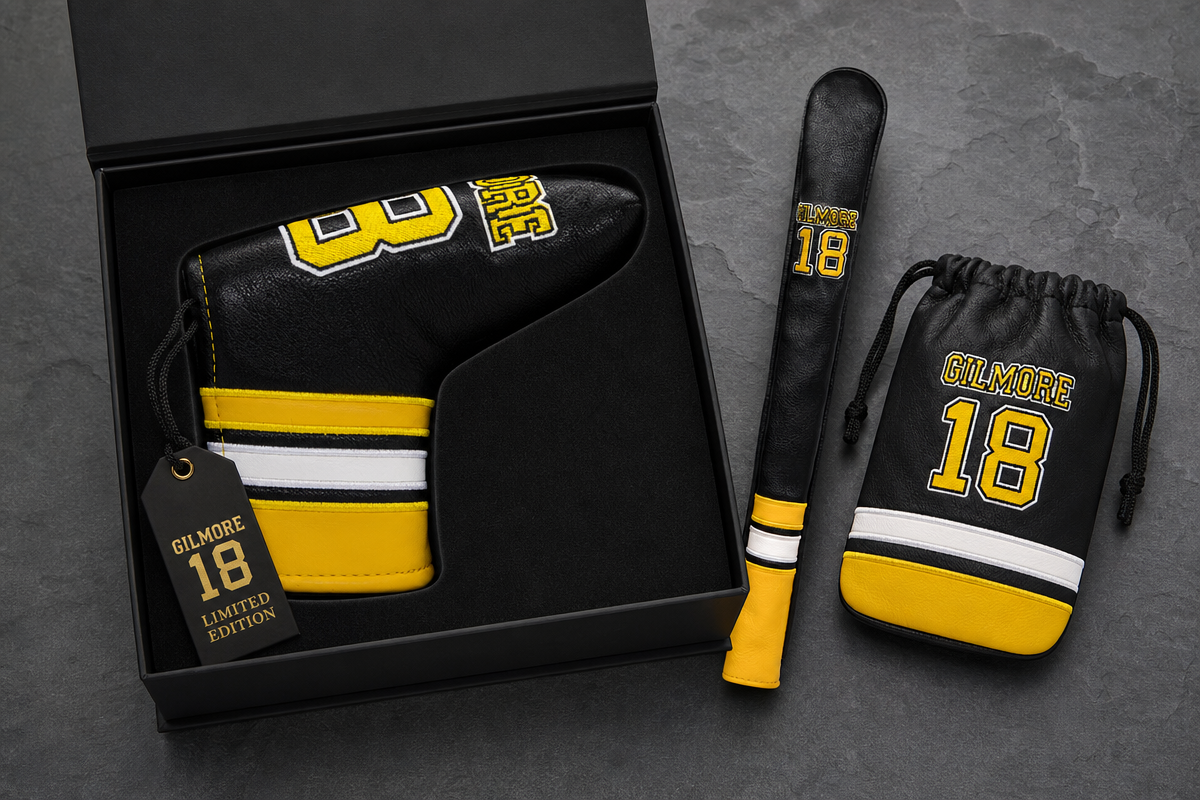
A wood set is not one cover; it is a matched family that has to fit every wood in the bag. The usual configuration is a 460cc driver cover plus two fairway covers, often with a hybrid added so the set covers the whole top of the bag. Sizes are not interchangeable. A fairway wood headcover and a hybrid headcover are built around different head volumes and neck lengths, so the set has to be specified club by club rather than ordered as several pieces of one pattern.
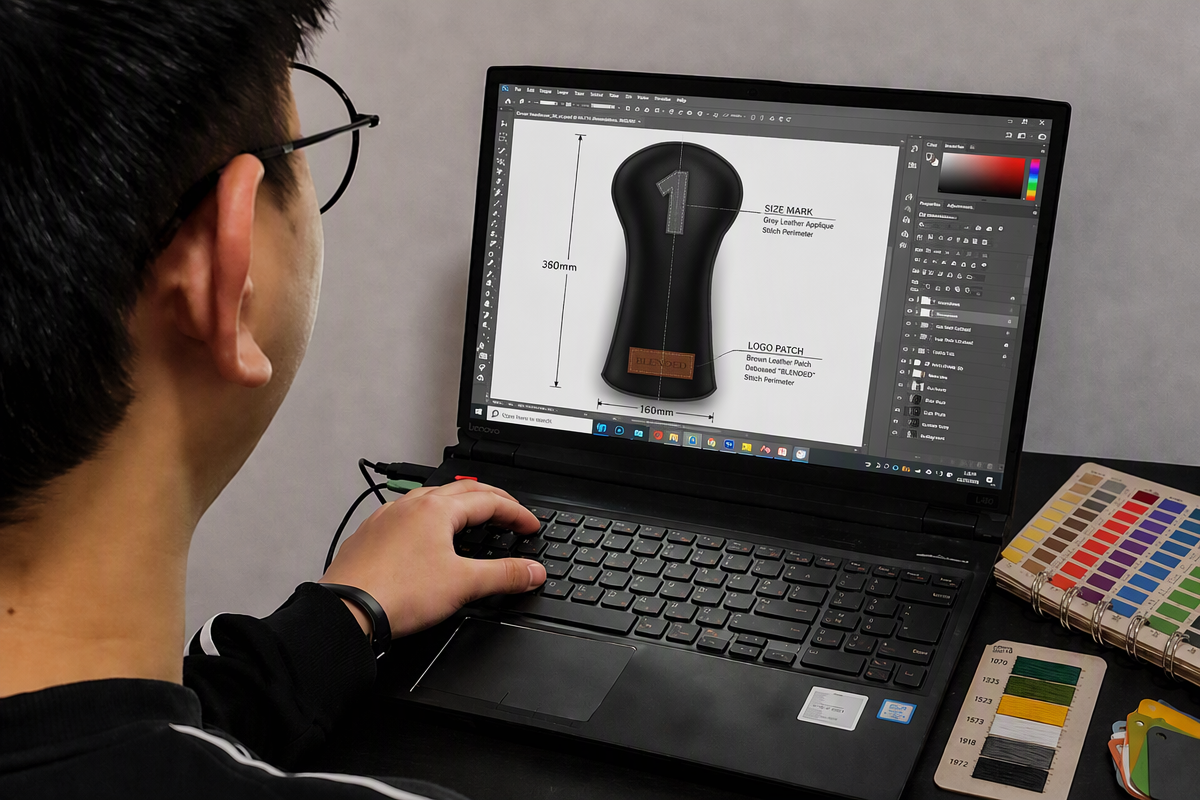
Decoration is the second specification. A typical crest carries the club mark, the tournament name, and the year — usually three to six thread colours on a panel that is small once the clubhead is inside it. That scale is the constraint: a crest drawn for letterhead carries detail that will not survive being stitched at the width of a fairway panel, so the artwork is simplified before digitizing rather than after a sample is rejected.
Material is the third. The panel has to hold a dense stitch field without the surrounding surface distorting, which is why PU leather golf headcovers are the working choice for a multi-colour crest — stable enough to take the fill, predictable enough to repeat across a run.
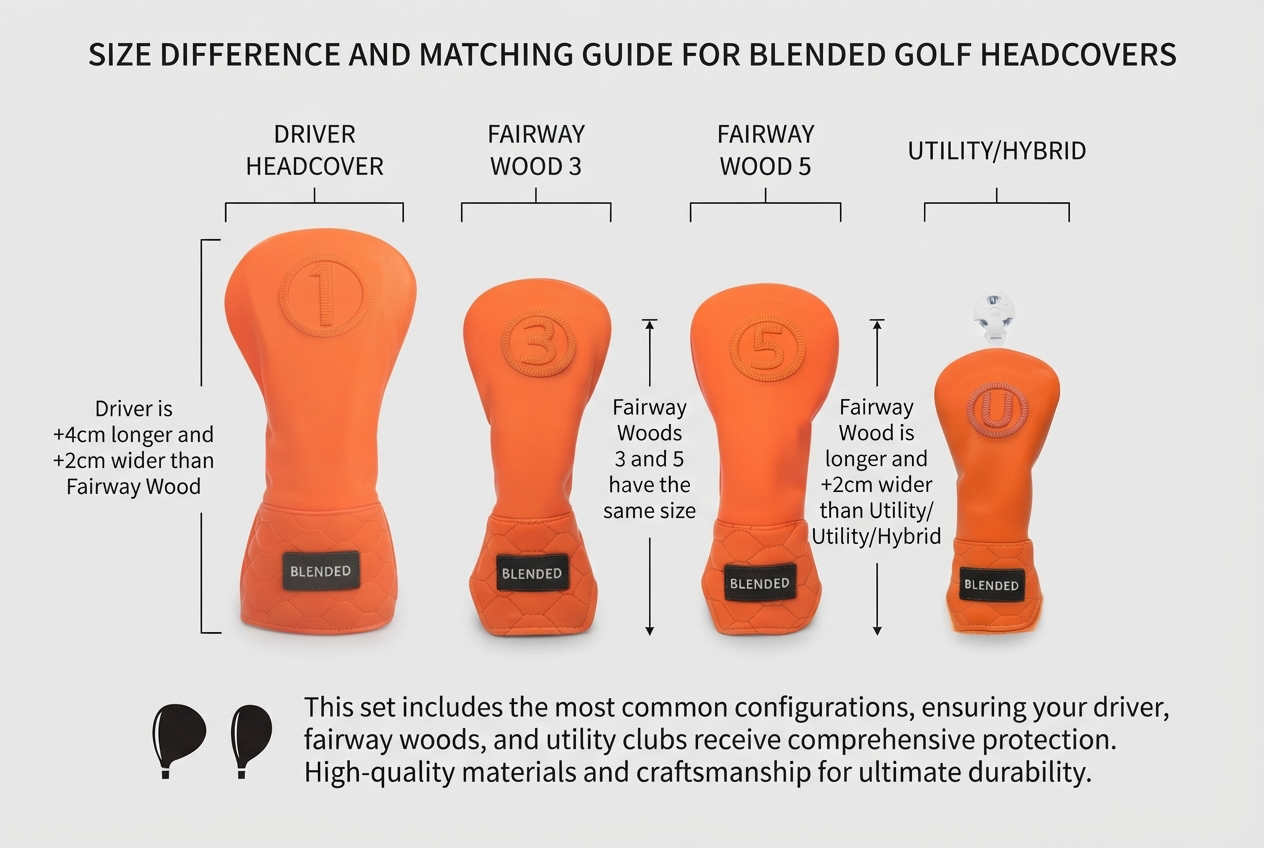
The Embroidery Engineering Behind a Club Crest
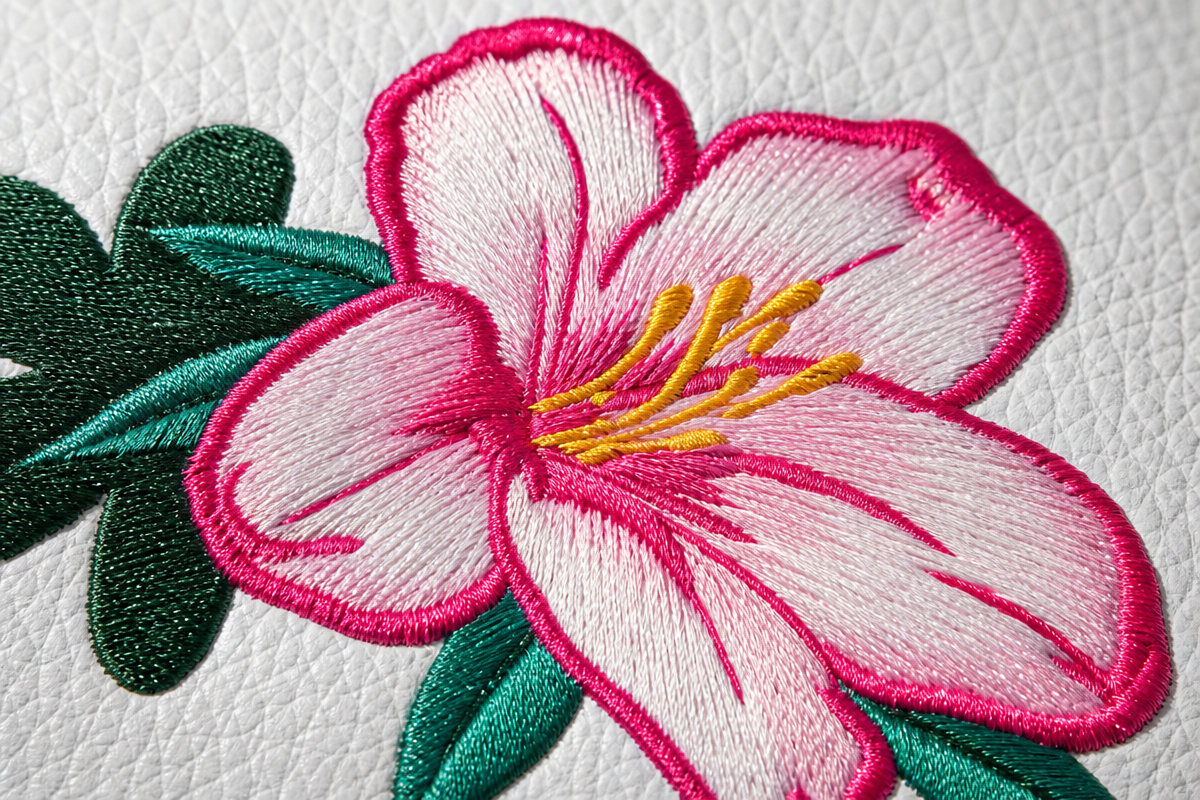
A crest is not a logo, and treating it as one is where most first samples go wrong. A logo is a flat shape that tolerates scaling; a crest contains thin rules, small lettering, and internal divisions that must stay legible a few centimetres across. Three decisions settle whether it reads. The first is how the artwork is simplified before digitizing — which internal lines become a single-pass run and which are dropped. The second is the underlay: without a correctly built base, the top layer sinks into the material and the crest loses its edge definition. The third is thread density and tension, because embroidery pulls the panel as it builds, and a fill that is too dense distorts the piece it is stitched onto.
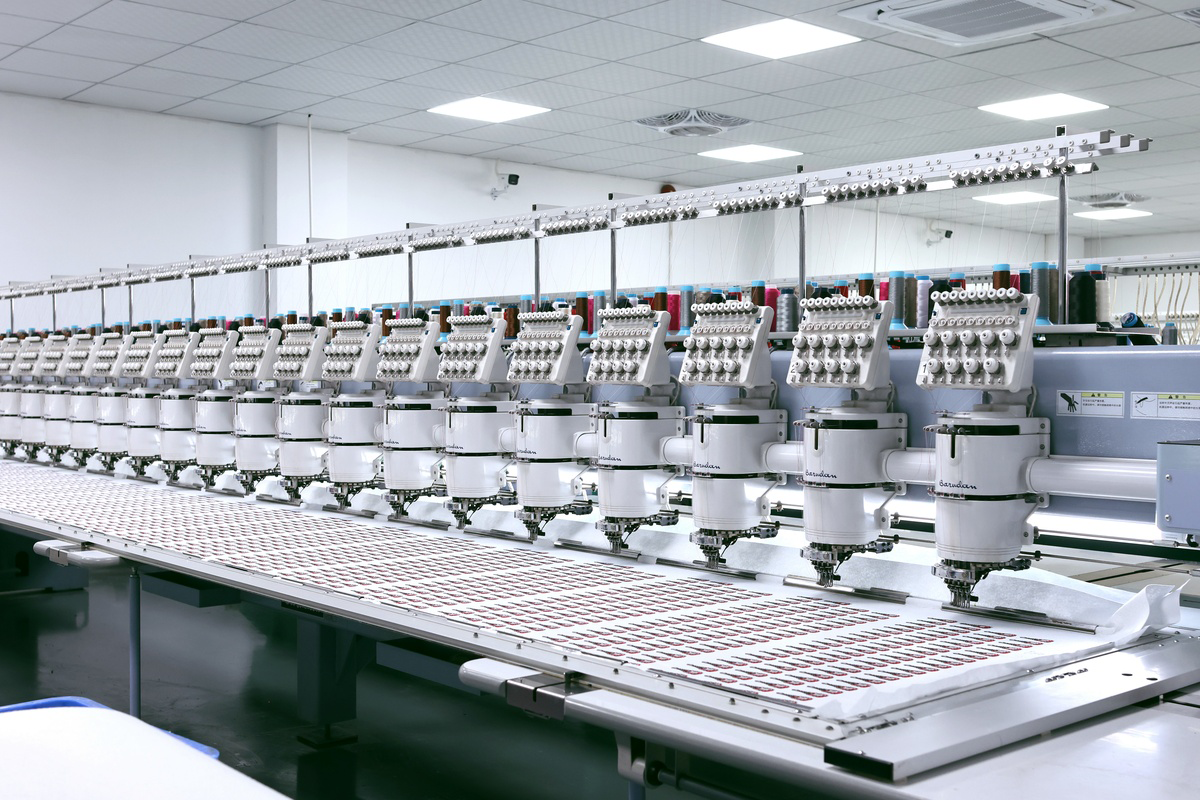
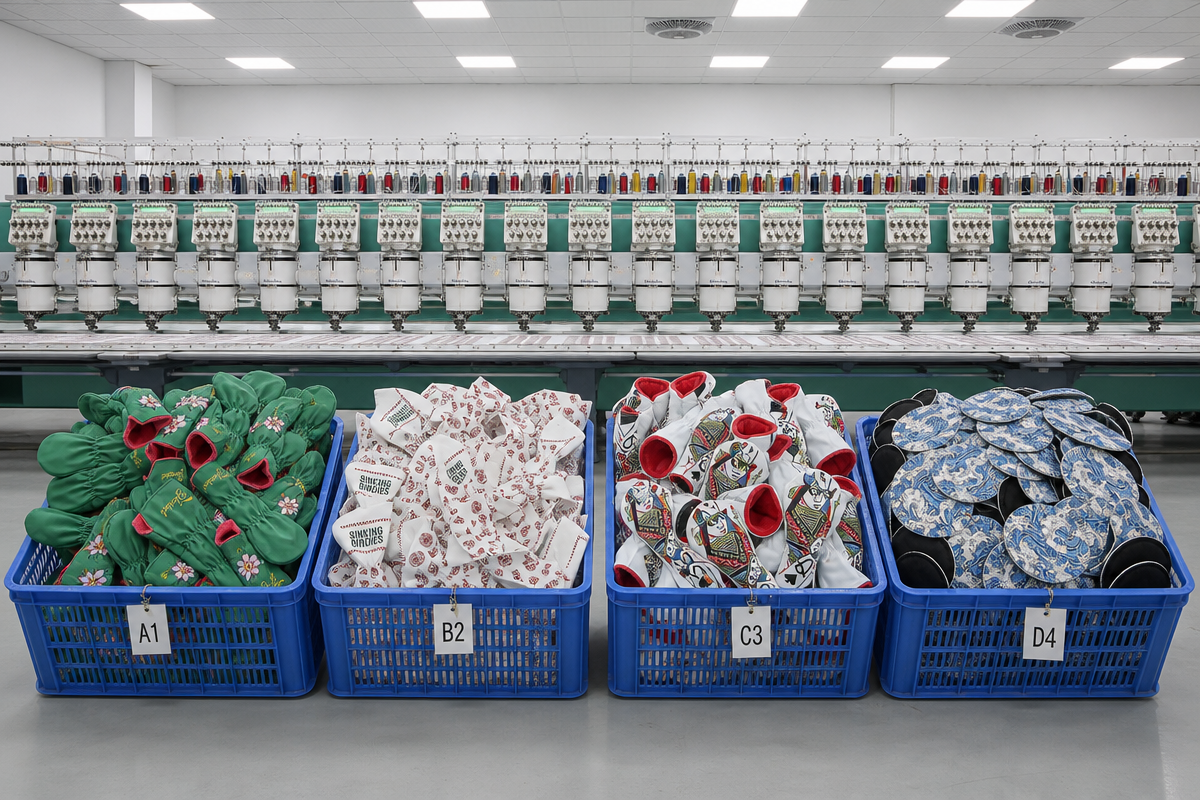
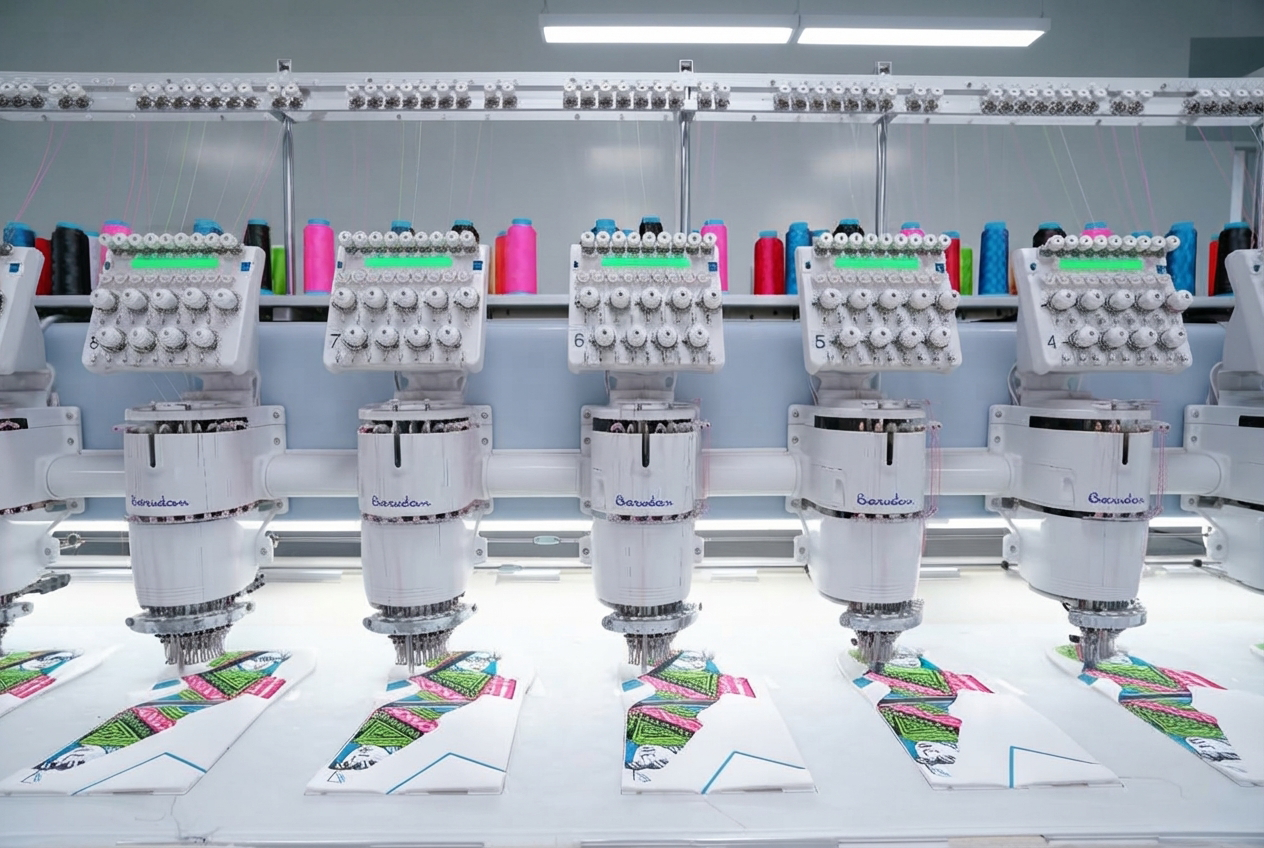
On embroidered golf headcovers the failure modes are visible from across a room — a crest gone oval, a rippled edge, a background showing through the fill. This is why machine capacity and operator consistency matter more than the design file. JT Golf runs 14 Japanese Barudan high-density embroidery machines at our Dongguan facility, which is what holds a multi-colour crest constant across a full tournament order instead of drifting piece by piece — and what makes techniques such as 3D embroidered headcovers practical rather than a one-off experiment.
Cost, Tooling, and Backwards Planning From the Tournament Date
The binding constraint on a tournament order is the calendar, not the price — and the calendar is usually lost before the factory is involved. Work backwards from the event date: delivery to the club, transit, bulk production, sample approval, sampling, then the club's own crest artwork sign-off. The step that most often runs long is the last: a crest has to clear the club's committee or board before release, and that internal delay is what turns a comfortable schedule into air freight.
Tooling behaves differently from the rest of the cost: the digitized stitch file is built once for a given crest and retained, so next year's set — identical except for the year mark — reuses it and skips most of the setup. That is why a member-guest set is not a one-off purchase but the first year of a cheaper program — and why clubs that state a multi-year intention get a different conversation than clubs buying one set at a time.
Volume is rarely the obstacle. Our standard terms are MOQ 100 pieces per design, sampling in 5–7 days, bulk production in 25–30 days after sample approval, and DDP delivery for US and EU addresses. For wholesale golf headcovers built as tournament sets, that minimum is not restrictive: a 120-player event where every player receives a four-piece set needs 480 pieces, and each of the four designs clears the 100-piece minimum on its own.
Personalisation, the Year Mark, and How a Driver Headcover Set Becomes a Collection
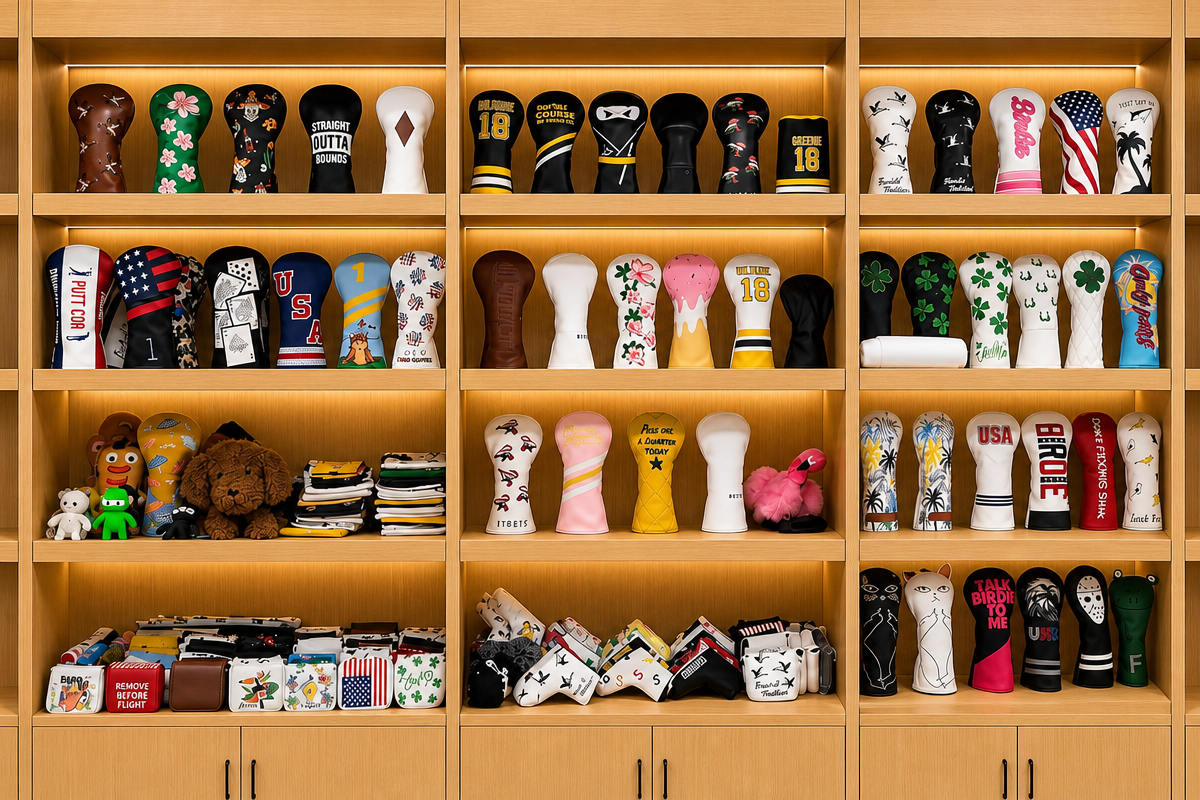
Two personalisation decisions decide whether a set gets collected or discarded, and they are not the same decision. The year mark is the easy one and the more valuable: it turns a gift into a series, so a member who played in consecutive years owns a dated sequence and notices when one is missing. That is what pulls the program into year three and four, at no cost beyond the artwork.
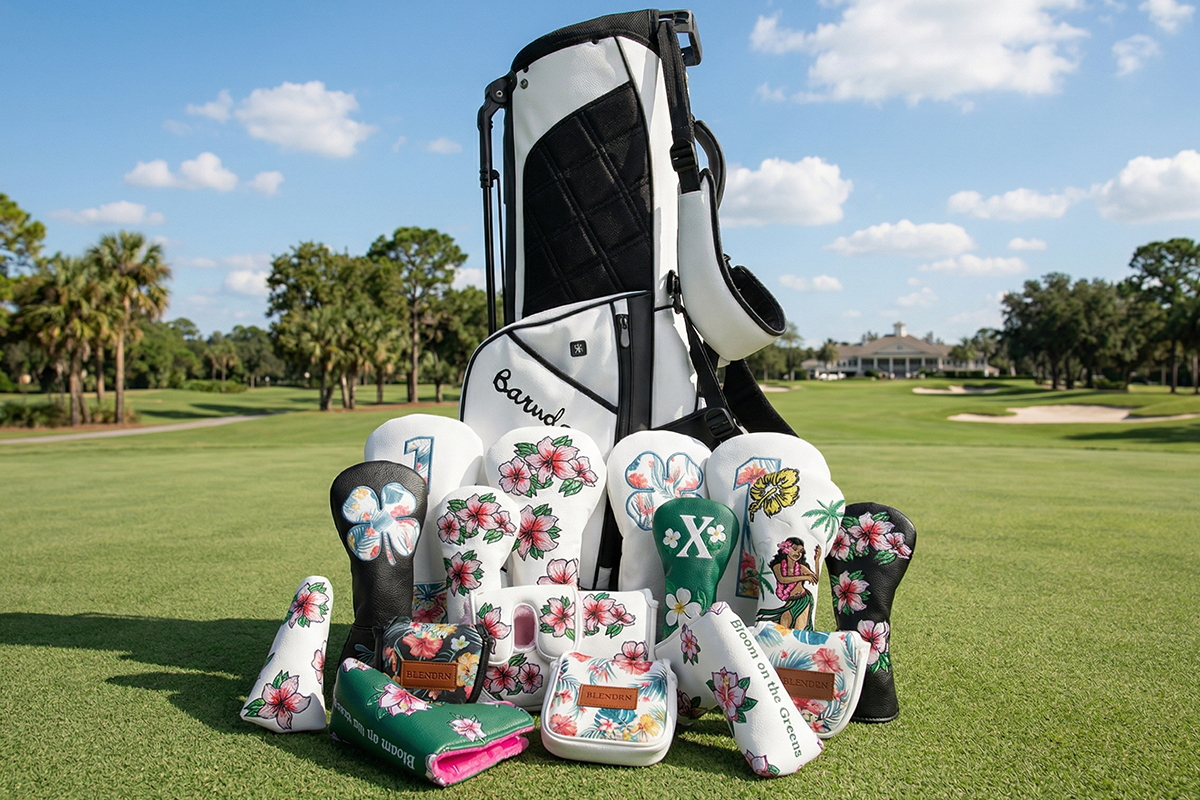
Naming is the harder one. Printing a guest's name makes the gift specific, but it also makes the set unusable for any other event — which matters if the club also wants to sell the design in the shop or reuse it for a members-only day. A workable compromise is to personalise only the most visible piece — the driver headcover is handled first on every tee — and leave the rest of the leather golf headcovers unnamed, so those pieces can be reordered, gifted, or sold. Clubs that want a broader merchandise program can have custom golf headcovers designed as a family alongside the tournament set, spreading one tooling investment across a shop line and an event at once.
Conclusion: The Gift Is the Only Part of the Day That Travels
A club invests in an embroidered wood set for one reason: it is the only line item in the tournament budget that keeps representing the club after the last putt drops. The decisions that make it work are the unglamorous ones — a crest simplified before digitizing, a set specified club by club, tooling treated as a reusable asset, and a calendar built backwards from the event date.
JT Golf manufactures OEM golf headcovers in PU leather at our Dongguan facility, with 14 Japanese Barudan high-density embroidery machines, artwork approved against a golden sample, inline inspection, and 100% final inspection before shipment. Our standard terms are MOQ 100 pieces per design, sampling in 5–7 days, bulk production in 25–30 days after sample approval, and DDP delivery for US and EU programmes. If your club is planning next season's member-guest set, send the crest, the year, and the number of players, and ask the custom golf headcover manufacturer behind the program to work the schedule backwards from your event date — so the set arrives with time in hand, not on the morning of the first tee.